78,670 Complaints Reveal Why 470 Area Code Scams Hit Georgians
Affiliate Disclosure: We may earn a commission if you use some links on this page, at no additional cost to you.
A 470 caller ID doesn’t prove a call is local or legitimate. Scammers spoof this Atlanta area code constantly because it looks familiar to Georgia residents. If you don’t recognize the number and no voicemail follows, treat the call as suspicious. Never call back, and forward any scam text to 7726. Report confirmed scams to the FTC or FCC right away.
Curious about a phone number?
Check the number to see what information and caller reports may be available.
Check a Phone NumberKey Takeaways
- Most scam calls from 470 numbers are spoofed, with scammers using cheap VoIP tools to fake local Atlanta area codes deliberately.
- Recognizing common scam scripts, like government impersonation or tech support schemes, can help prevent falling victim to these calls.
- Let unknown 470 calls go to voicemail, and verify suspicious numbers with reverse lookup tools before calling back.
- Speeding up scam reports by forwarding texts to 7726 and submitting complaints to FTC and FCC helps combat these frauds more effectively.
- Carrier protections and behavioral habits, like silencing unknown callers, are more effective long-term defenses against spoofed 470 scams.
Table of Contents
- What the 470 Area Code Covers and Why Scammers Use It
- How Caller ID Spoofing Actually Works
- Common 470 Scam Scripts You Should Recognize
- A Quick Checklist Before You Answer or Call Back
- What to Do the Moment You Spot a Scam
- Prevention That Actually Holds Up Long-Term
- How Whocalledusa Helps You Check a Suspicious 470 Number
- Why Skepticism Beats Confidence Here
- Check Any 470 Number Before You Call Back
- Where to Report and Learn More
- Sources
What the 470 Area Code Covers and Why Scammers Use It
The 470 area code is a real, active overlay serving Atlanta and the surrounding metro area, assigned alongside 404, 678, and 770 as the region ran out of numbers. It’s not a scam by itself, and AT&T confirms it’s a legitimate Atlanta code used by real businesses and residents every day.
The problem is exposure. High population density and heavy complaint volume make 470 a favorite mask for spoofers. One tracking service logged 78,670 FTC complaints tied to 470 numbers, with a significant share of the reported victims living in Georgia. That’s a textbook neighbor-spoofing pattern: scammers borrow a local prefix because it lowers your guard.
A few things worth remembering about that:
- 470 covers Atlanta and its suburbs, and it’s just as legitimate as any other area code.
- A large share of complaints against 470 numbers come from Georgia residents themselves.
- The area code shown on your screen tells you nothing about where the call actually originated.
How Caller ID Spoofing Actually Works
Spoofing isn’t sophisticated hacking. Scammers use cheap VoIP software to type in whatever number they want displayed, including one with your own area code and prefix. That’s called neighbor spoofing, and it’s designed to make the call feel local and trustworthy.
A nastier variant is mirror spoofing, where the incoming number is nearly identical to your own. The idea is that curiosity gets the better of you. Answering, or worse, calling it back, confirms to the scammer that your line is active and worth targeting again.
The industry’s main defense is STIR/SHAKEN, a caller ID authentication framework carriers use to flag likely spoofed traffic. It helps, but it’s not foolproof. The FTC notes that missing attestation still requires consumer judgment, since plenty of spoofed calls still slip through with valid-looking labels.
- VoIP tools make faking any area code trivial and cheap.
- Neighbor spoofing matches your area code and prefix on purpose.
- Mirror spoofing uses numbers nearly identical to yours to bait a callback.
Pro Tip: If a number looks almost identical to your own phone number, that’s not a coincidence. Don’t call it back to “check.”
Common 470 Scam Scripts You Should Recognize
Scam calls from 470 numbers tend to follow a handful of recycled scripts. Once you recognize the pattern, the pressure tactics stop working.
- Government impersonation. A caller claims to be from the IRS, Social Security, or local police, demanding immediate payment via gift card or wire transfer to avoid arrest.
- Tech support scams. The caller says your computer is infected and asks for remote access or a “repair fee,” often while walking you through installing screen-sharing software.
- Wrong-number smishing. A friendly text starts a casual conversation, then steers toward a crypto investment or dating scheme once you’ve replied.
- One-ring and premium-rate traps. The phone rings once and disconnects, hoping you’ll call back a number that bills you per minute.
Any of these showing up from a 470 number doesn’t mean the scam is Atlanta-based. It just means the number was chosen to look that way.
A Quick Checklist Before You Answer or Call Back
Run through this the moment an unfamiliar 470 number rings or texts you.
- Let it go to voicemail. Legitimate callers, including government agencies and banks, almost always leave a message.
- Never give out your Social Security number, bank details, or remote-access permission to someone who called you first.
- If the caller claims to be from a government agency or your bank, hang up and dial the number listed on the official website instead.
- Search the number in a reverse-lookup tool like Who Called Me? Reverse Phone Lookup before you consider calling back.
The scale of this problem is worth sitting with: nearly 78,670 complaints against 470 numbers have been filed with the FTC, and close to half of the people affected live right here in Georgia. That’s not a fringe issue. That’s a pattern built around your own area code.
What to Do the Moment You Spot a Scam
Speed matters here, both for protecting yourself and for helping shut the operation down.
- Hang up immediately. Don’t engage, argue, or try to “waste their time.” It doesn’t help and sometimes confirms your number is active.
- Forward any scam text to 7726 (SPAM). Carriers use these reports to identify and block spam senders across networks.
- File a report at reportfraud.ftc.gov and submit a complaint through the FCC’s Consumer Complaint Center.
- Contact your carrier to enable call-filtering tools and report the specific number.
- If you’re in Georgia and dealing with threats or impersonation, the Georgia Attorney General has issued specific guidance on text scams and how to report them at the state level.
Prevention That Actually Holds Up Long-Term
Blocking a single number rarely helps for long. Scammers rotate through spoofed numbers so fast that yesterday’s block is meaningless today. The fix is behavioral, not reactive.
- Turn on carrier-level protections: AT&T Call Protect, Verizon Call Filter, or T-Mobile Scam Shield all flag likely spoofed calls automatically.
- Set your phone to silence unknown callers, which routes anything not in your contacts straight to voicemail.
- Filter spam texts at the OS level (both iOS and Android have built-in settings for this).
- Run a quick reverse lookup before returning any unfamiliar call, and keep your phone’s software updated so carrier-side filtering stays current.
Pro Tip: Treat “no voicemail” as your default filter. If it mattered, they’ll leave a message.
How Whocalledusa Helps You Check a Suspicious 470 Number
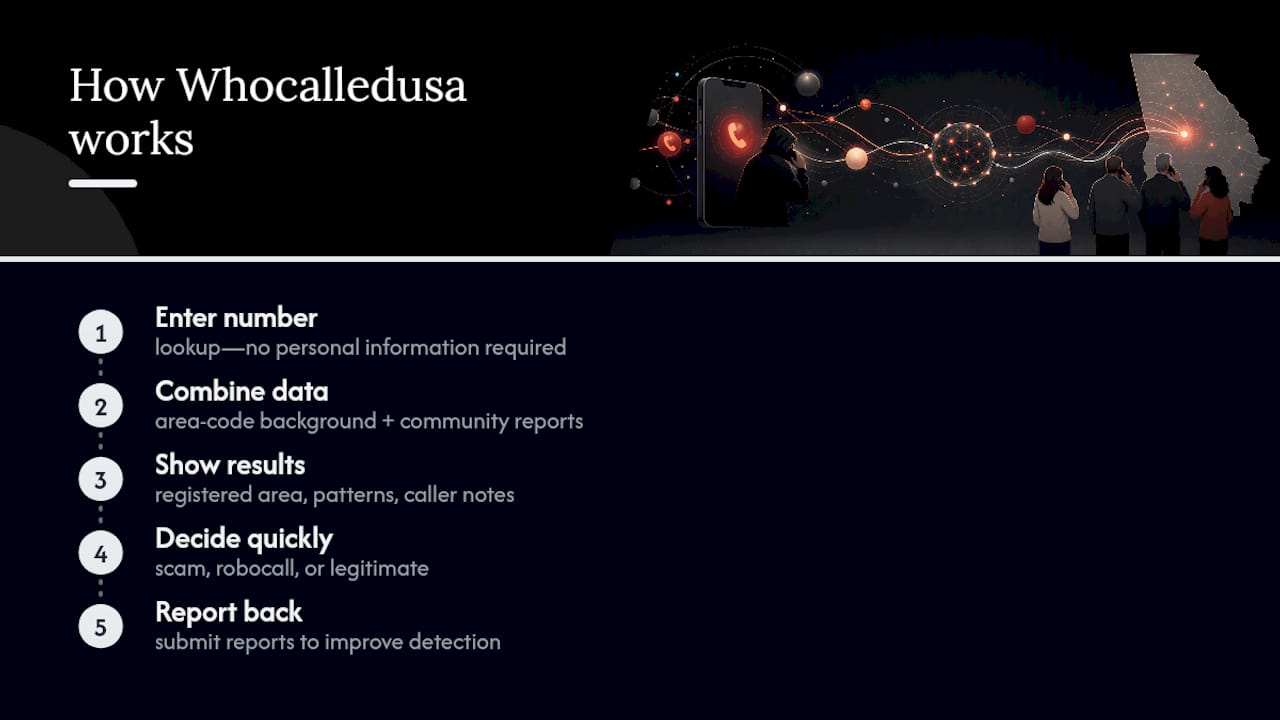
Whocalledusa is built for exactly this moment: a number you don’t recognize is calling, and you want an answer before you pick up. The platform combines area-code background with community-submitted reports, so you can see whether other people have flagged that specific number as a scam, a robocall, or something legitimate.
A typical lookup shows the number’s registered area, any patterns other users have reported, and notes on caller behavior. No personal information is required to search, and the reports you submit after a scam call help sharpen detection for the next person who gets that same call.
Why Skepticism Beats Confidence Here
The instinct to trust a local-looking number is exactly what scammers count on, and that’s the habit worth breaking. My rule is simple: if I don’t recognize the number, I let it ring out. If it mattered, there’s a voicemail. If there isn’t, I run a quick lookup before I do anything else. Individual vigilance matters, but the reporting systems the FTC and FCC maintain only get sharper when more people actually use them.
— Cecilia
Check Any 470 Number Before You Call Back
You don’t need to guess whether that Atlanta-area number is real. Who Called Me? Reverse Phone Lookup lets you search any US number in seconds and see community reports from people who already dealt with it, whether it turned out to be a legitimate business or a scam script running through a spoofed line.
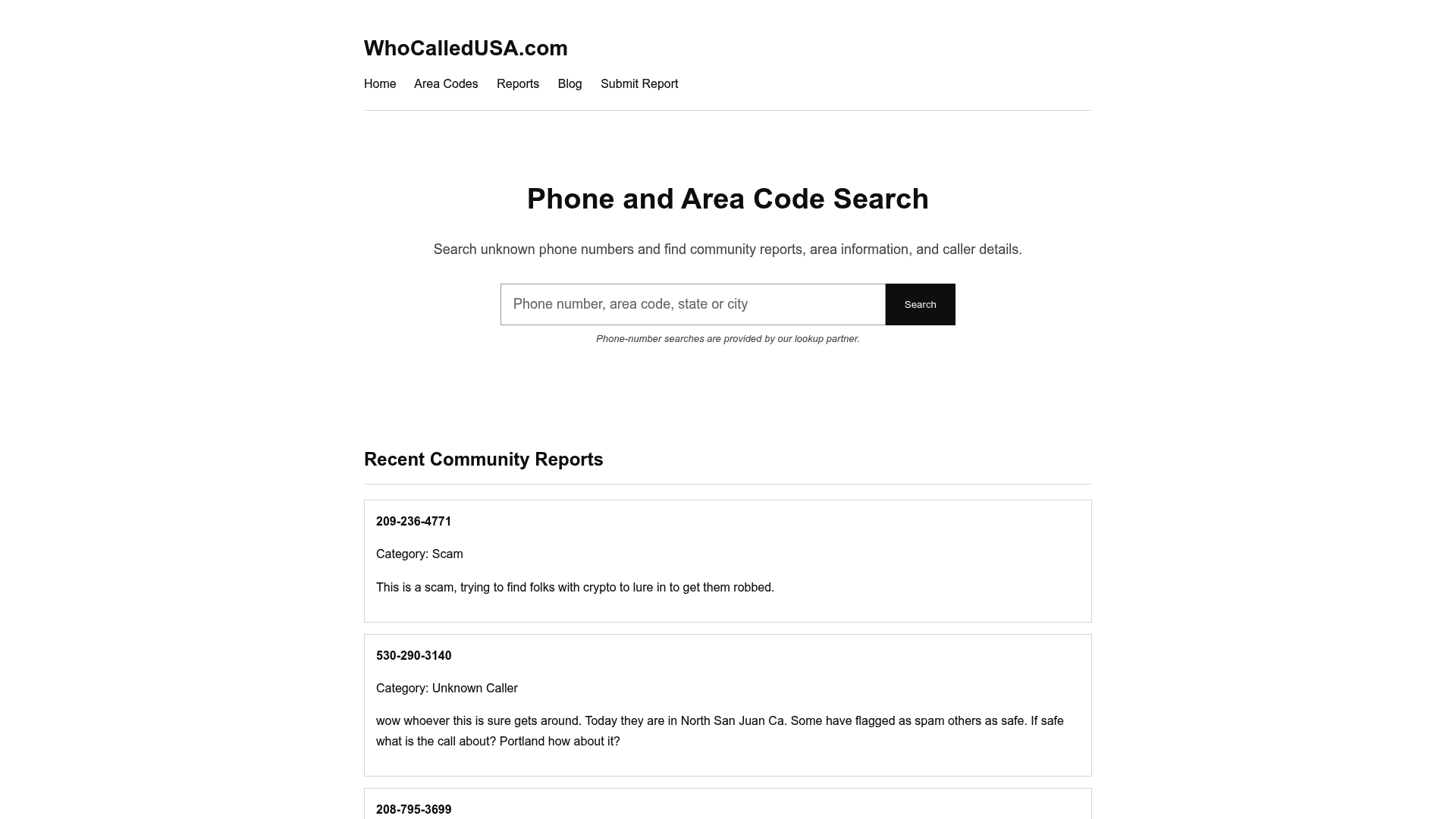
Search takes no personal information beyond the number itself, and every report you submit after a suspicious call helps sharpen detection for the next Georgian who gets that exact call. If a 470 number just rang your phone and something felt off, look it up on Who Called Me? Reverse Phone Lookup before you dial anything back. It’s the fastest way to move from guessing to knowing.
Where to Report and Learn More
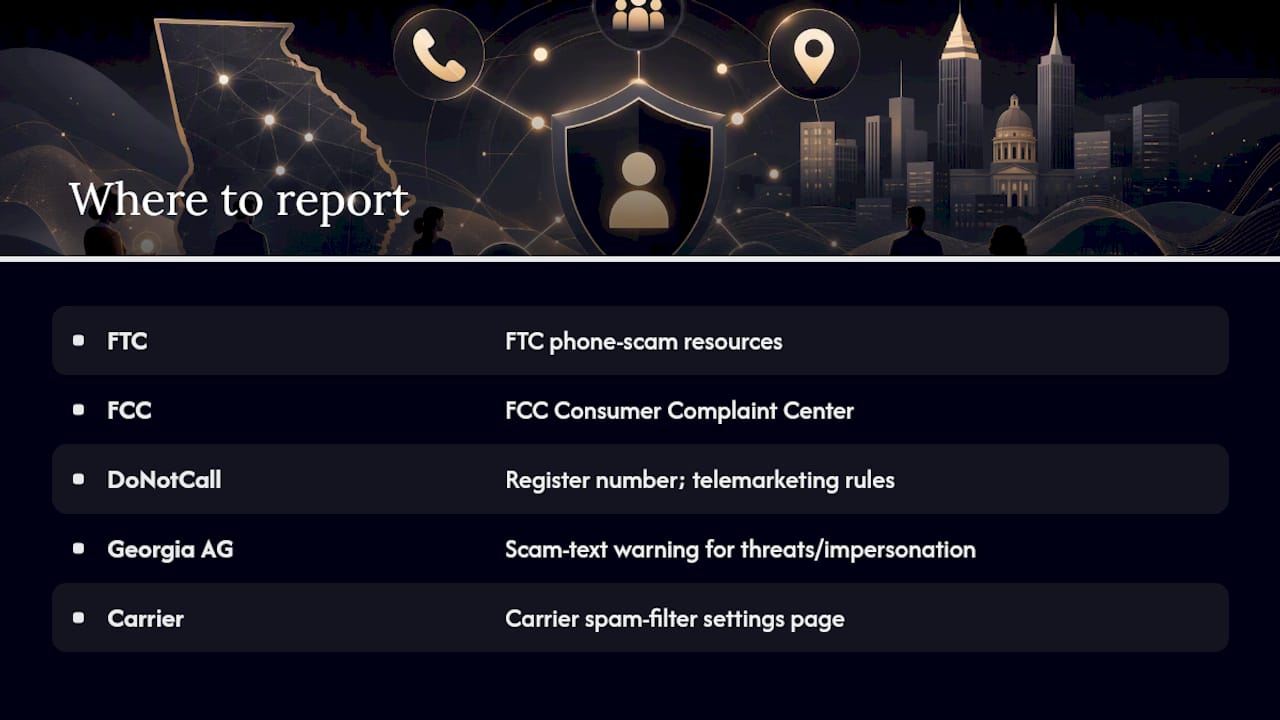
For federal complaints, use the FTC’s phone scam resources or the FCC Consumer Complaint Center. Register your number and check telemarketing rules at Donotcall. Georgia residents facing threats or impersonation should review the Georgia Attorney General’s scam-text warning. Your carrier’s spam-filter settings page rounds out the toolkit.
Sources
- Phone Scams | Consumer Information | FTC
- File a complaint | Consumer Complaint Center | FCC
- Stop unwanted robocalls and texts | FCC
- Carr warns Georgians of text message scams
- 470 Area Code: Atlanta — AT&T
Recommended
- Area Code 272 - Location, Cities & Phone Number Reports
- Area Code 229 - Location, Cities & Phone Number Reports
Curious about a phone number?
Check the number to see what information and caller reports may be available.
Check a Phone Number